
Are you concerned with the amount of toxins lurking in your body? If you’ve been feeling sluggish, bloated, or simply unwell, you may be dealing with toxin build up in your body.
We are exposed to toxins every day — from the air we breathe to the food we eat. The long-term effects of toxin exposure can lead to health problems such as cancer, auto-immune diseases, reproductive issues, and more.
But there are simple ways we can reduce the toxin build up in our bodies and protect our health.
Here you’ll discover the benefits of a toxin-free lifestyle with some easy ways to start reducing your toxin build up to improve your health and wellbeing.
Read on to learn how to easily cut down your body’s toxic load and get back to feeling your best!
Medical Disclaimer: This post is for educational purposes only and is not medical advice. I’m not a healthcare professional, and nothing here is a substitute for guidance from your provider. Always consult a qualified professional before making changes to your health, supplements, or lifestyle. Please see the full disclaimer for more details.
Affiliate Disclosure: This post may contain affiliate links or links to Amazon. If you choose to purchase anything through these links, I may earn a commission at no cost to you. As an Amazon Associate, I earn from qualifying purchases. Thank you so much for your support, you’re the best! See the full disclosure for details.
10 Benefits of Reducing Your Toxin Build Up With a Toxin-Free Lifestyle
A toxin-free lifestyle has so many amazing perks! By reducing your toxin build up, you’ll also lessen the negative effects toxins have on your overall health and wellbeing.
Here are 10 benefits of reducing your exposure to toxins that I’m sure you’ll want to take advantage of:
- Balanced hormones (i.e. less PMS symptoms)
- Reduced inflammation
- Less risk of disease, such as cancer
- Increased immunity
- Better digestion
- Less bloating
- Weight loss
- Better sleep and mood
- Increased energy levels
- Reduced allergy and asthma symptoms
- BONUS: Reduced carbon footprint by using less single-use plastic
👉 And that’s not all! For even more perks of going clean with a low-tox life, check out: 21 Clean Living Benefits You’ll Actually Notice in Real Life.
Who couldn’t use at least a few of these health improvements? I have personally seen most of those benefits myself since starting my clean living journey.
By reducing your toxic load, you’re going to feel so much better! That’s really what it comes down to—feeling better and also living longer with a better quality of life.
Want an Easy Place to Start?
If you’re new to clean living, figuring out which swaps actually matter can feel overwhelming.
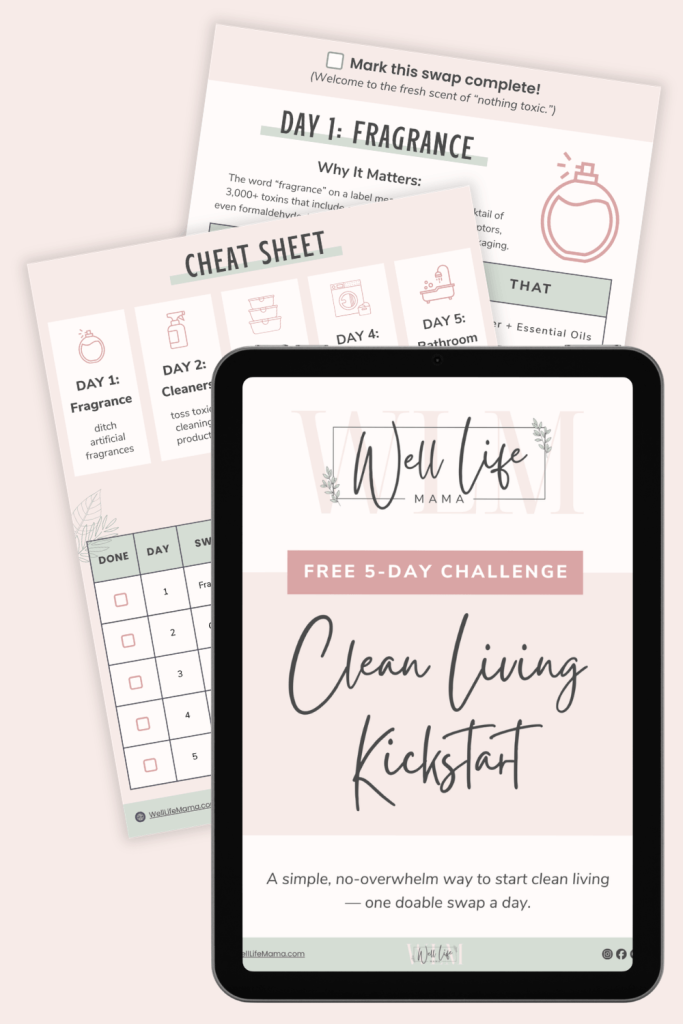
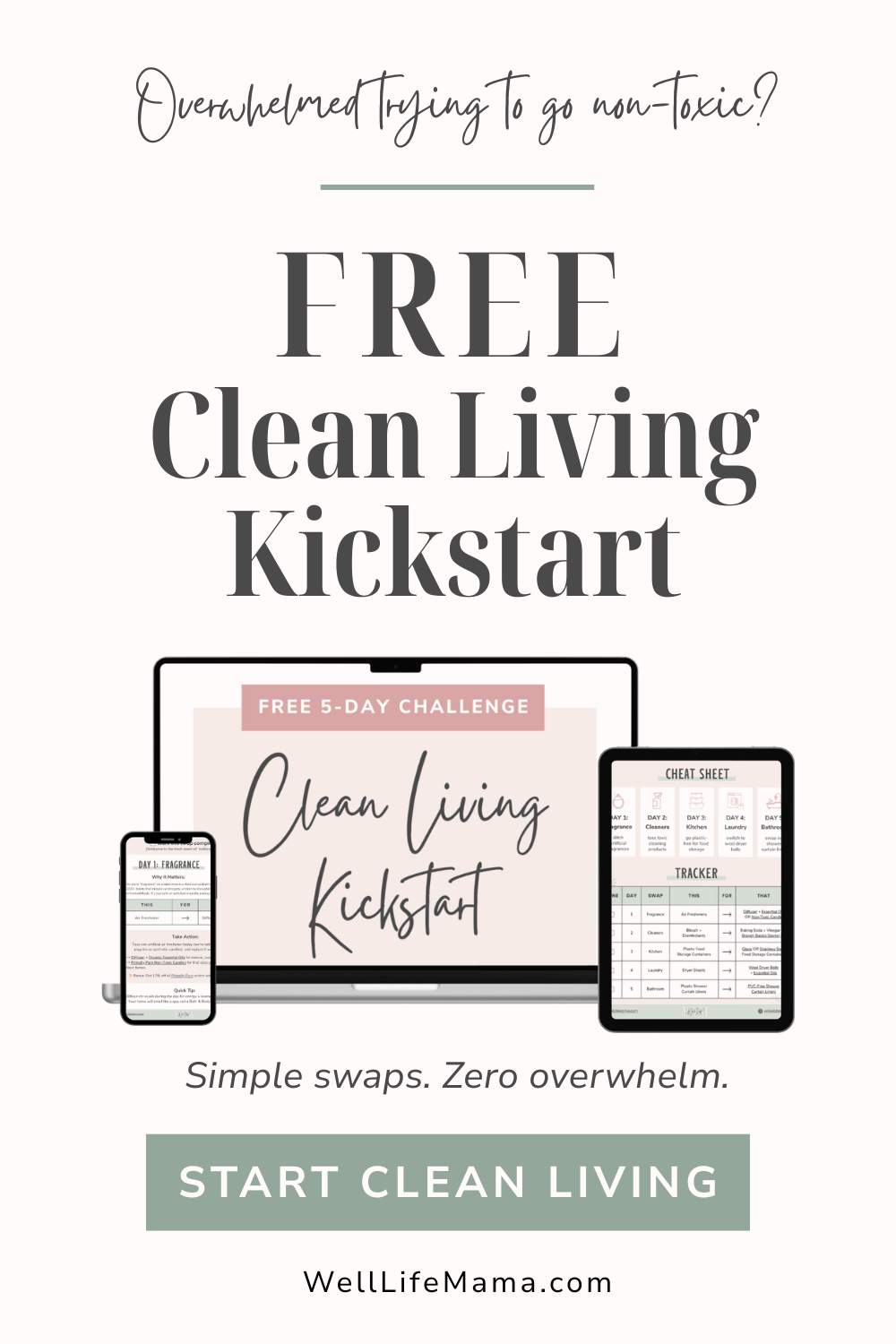
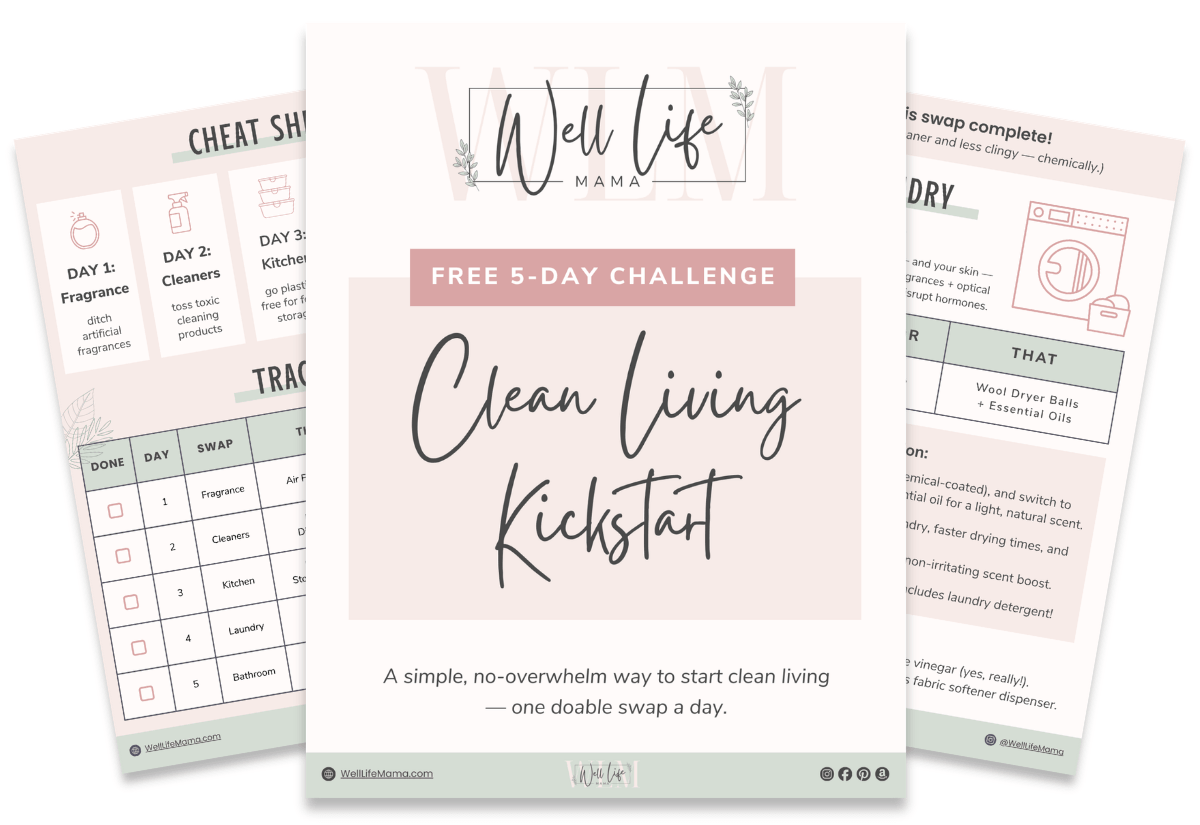
That’s why I created a free 5-Day Clean Living Kickstart that walks you through 5 simple swaps to reduce toxins in your home without hours of research.
✔ quick wins
✔ beginner-friendly swaps
✔ no overwhelm
5 Easy Ways to Start Reducing Your Toxin Load
Have you been wanting to reduce your toxin build up to improve your health but feel overwhelmed and don’t know where to start?
When you dive in, you may be shocked by the amount of toxic items in your home. And figuring out where to start eliminating them can have you screaming into a pillow. 😖
Don’t stress! I’ve gotchu, boo. We’re going to keep it simple by focusing on 5 key toxic areas in your life.
And you don’t have to do all 5 at once. Start with just 1 of the 5 options below, and go from there.
It just takes 1 thing to get started! Then you can add to your toxin-banishing mission by gradually incorporating the rest.
👉 You may also like: Non-Toxic Swaps: How to Replace Toxic Items and Start Clean Living (Beginner Guide)
1. Plastic
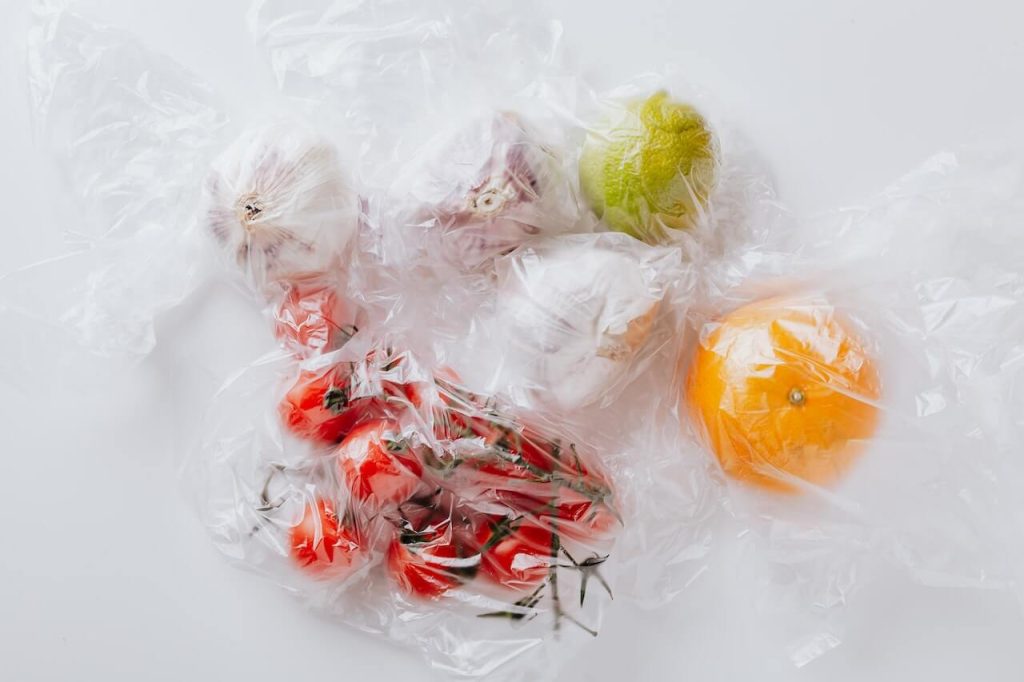
Plastic is a great place to start when it comes to lightening your toxic load. Most plastics are petroleum-based and leach plastic additives along with hormone disrupting chemicals like phthalates, even BPA-free ones.
Petroleum-based chemical products have mutagenic and carcinogenic properties [1], are endocrine disruptors [2], and can cause cancer, birth defects, hormonal disorders, and damage to the brain, nerves, and liver [3].
When you start to look around, you’ll realize plastic is EVERYWHERE – from the packaging for food to coffee makers and single-serve coffee pods to sneaky places you wouldn’t think of like dishwasher pods.
It’s pretty much impossible to eliminate all plastic from your life. But you can significantly reduce the amount of plastic you use by focusing on one key area in your home: your kitchen.
You’ll find the majority of plastic products living in your kitchen where they come in contact with your food. Ew! This is where you want to start tossing as much plastic as possible.
Non-Toxic Swaps for Plastic to Reduce Your Toxin Build Up
There are several different non-toxic alternatives for plastic that you can switch to including glass, stainless steel, silicone, and bamboo.
Focus on cooking tools and food storage containers, basically the items that come in direct contact with your food, beverages, and mouth.
Here are some examples:
| THIS | ➞ | THAT |
| Plastic Water Bottles | ➞ | Reusable Stainless Steel Bottles or Glass Bottles |
| Plastic Wrap | ➞ | Reusable Stretch Silicone Lids |
| Ziplock Bags | ➞ | Reusable Platinum Silicone Bags free of PVC and BPA |
| Tupperware | ➞ | Glass Containers with BPA-Free Lids |
| Plastic Cooking Utensils | ➞ | Silicone Cooking Utensils |
| Plastic Measuring Cups | ➞ | Glass Measuring Cups |
| Plastic Measuring Spoons | ➞ | Stainless Steel Measuring Spoons |
| Plastic Cutting Boards | ➞ | Bamboo Cutting Boards |
| Plastic Dishwasher Pods | ➞ | Non-Toxic, Plastic-Free Dishwasher Tablets |
| Plastic Produce Bags | ➞ | Reusable Organic Cotton Produce Bags |
👉 For even more non-toxic kitchen and household swaps, check out: Non-Toxic Swaps: How to Replace Toxic Items and Start Clean Living (Beginner Guide)
2. Fragrance
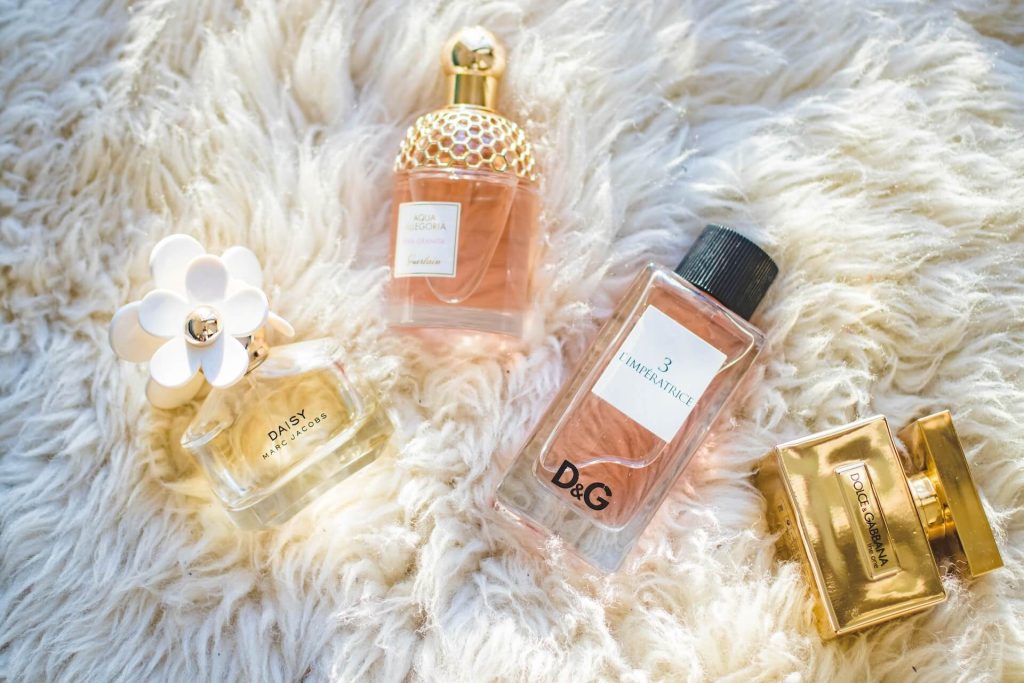
Eliminating fragrance will make a significant impact in reducing your toxin build up! Artificial fragrances are cocktails of toxic, carcinogenic chemicals including phthalates and formaldehyde.
Phthalates are carcinogenic [4] endocrine disrupting chemicals [5] that cause reproductive issues [6] including infertility [7] as well as increased risk of miscarriage [8] and gestational diabetes [9].
They have also been linked to birth defects [10], risk of preterm birth [11], developmental issues [12], autism spectral disorder [13], childhood behavioral problems [14], asthma [15], diabetes [16], breast cancer [17], and a higher incidence of childhood cancers [18].
What’s even worse is the fact that companies don’t have to disclose all the toxic ingredients in their fragrances because they’re considered proprietary.
You’ll find artificial fragrances listed on ingredient labels as “fragrance,” “perfume,” and “parfum.” So be sure to avoid all of those!
You’ll also want to avoid “unscented” products. They can contain masking agents to cover up scents with other toxic chemicals. Instead, try to get “fragrance-free” products.
Breaking up with fragrances can be rough at first. You might go into withdrawals and miss them initially. But like a bad relationship, as much as you may love fragrances, they’re not good for you.

And once you eliminate them, not only will you not miss them, you’ll become keenly aware of how overpowering and obnoxious they are.
Eventually, you won’t be able to stand them anymore. You’ll even find yourself gagging as you walk by the cleaning aisle at the grocery store.
That just goes to show that even though they’re in bottles, they’re seeping out into the air you’re breathing.
So you’ll want to get rid of candles, air fresheners, perfume, dryer sheets, and any other scented items like garbage bags (that includes pet waste bags too).
Another note about candles is that beyond the artificial fragrances used with them, traditional candles also use paraffin wax.
Paraffin wax is another toxic ingredient that’s petroleum-based and has been found to contain known carcinogens like benzene.
But if you love burning candles, don’t shed a tear just yet! There are other healthier, non-toxic wax options below.
👉 You may also like: 21 Clean Living Benefits You’ll Actually Notice in Real Life
Non-Toxic Swaps for Fragrances to Reduce Your Toxin Build Up
Just because you’re ditching artificial fragrances doesn’t mean you have to go completely scentless in life. Essential oils are a non-toxic alternative to add some smell-good vibes.
Just make sure they’re 100% pure essential oil and not mixed with any other solvents. If you can, go organic to avoid pesticides too.
For candles, choose beeswax, soy wax, or coconut wax with a cotton or wood wick. You’ll just want to confirm they’re not blended with any other waxes.
And keep in mind, most soybeans are genetically modified. So if you can find non-GMO soy wax candles, even better!
Wondering how to have safe scents in your life? Check out these options:
| THIS | ➞ | THAT |
| Candles | ➞ | Primally Pure Beeswax + Coconut Wax Candles Beeswax Candle Soy Wax Candle Coconut Wax Candle |
| Air Fresheners | ➞ | Diffuser with pure Essential Oils |
| Perfume | ➞ | Essential Oil Deodorant Spray (I sometimes use this as a body spray) |
| Dryer Sheets | ➞ | Wool Dryer Balls (you can add a few drops of pure Essential Oil to the balls if you want to add scent to your laundry) |
| Scented Garbage Bags | ➞ | Unscented Garbage Bags |
| Scented Pet Waste Bags | ➞ | Unscented Compostable Pet Waste Bags |
5 Easy Swaps To Start Clean Living
Overwhelmed by labels, toxins, and where to even begin? This FREE 5-Day Clean Living Kickstart shows you how to start clean living with simple swaps—no extremes, no stress, no pressure to be perfect.

3. Household Cleaners
Have you ever read the warning labels on your household cleaners? Scary, right?! Switching from toxic chemical cleaners to natural cleaning products will be a huge step to reduce toxins in your body.
Research shows that regular exposure to conventional cleaning products can have the same negative effect on lung function as smoking a pack of cigarettes a day [19]. 😱
Here are just a few of the toxic ingredients that can be in your household cleaners:
Chlorine Bleach – fumes from bleach can cause DNA damage, cancer, asthma, and a variety of other illnesses.
Fragrance – refer back to the Fragrance section above.
VOCs (Volatile Organic Compounds) – chemicals released into the air as hazardous gasses (benzene, formaldehyde, chloroform, etc.) that have been linked to autoimmune diseases and cause a variety of health issues, such as liver, kidney, and central nervous system damage as well as cancer [20].
Petrochemicals – petroleum-based chemical products that have mutagenic and carcinogenic properties [21], are endocrine disruptors [22], and can cause cancer, birth defects, hormonal disorders, and damage to the brain, nerves, and liver [23].
Phenoxyethanol – often claimed to be a “safe” preservative, but it’s actually a neurotoxic [24] chemical linked to liver and kidney damage [25], central nervous system depression [25], reproductive [26] and developmental toxicity [27], skin irritation [28], and allergic reactions [29].
Luckily, the dozens of toxic cleaning products you’ve probably been using can easily be replaced.

Non-Toxic Swaps for Household Cleaners to Reduce Your Toxin Build Up
Instead of the standard toxin-laden cleaners, use a natural solution free of toxic chemicals and fragrance like vinegar and baking soda or my favorite non-toxic cleaner, Branch Basics!
With just one bottle of the all-natural, non-toxic, plant and mineral-based Concentrate cleaning solution by Branch Basics, you can make (and refill) all the household cleaners you’ll need!
I use it to clean my bathrooms, toilets, laundry, kitchens, dishes, retainers, even my dog, and more! With Branch Basics, you can simplify and detoxify your life in one easy step.
When you’re ready to swap out your toxic household cleaners, get 15% off your first Branch Basics purchase with my code “WLM15“ and #tossthetoxins!
Here are some of the many ways to use Branch Basics along with a few other helpful non-toxic cleaning products you may want to try:
| THIS | ➞ | THAT |
| Dishwashing Soap | ➞ | Branch Basics Foaming Bottle with the Concentrate Dr. Bronner’s Castile Soap (for greasier dishes) ATTITUDE Dish Soap, Unscented (EWG VERIFIED™) |
| Dishwasher Pods | ➞ | Blueland Dishwasher Tablets Branch Basics Dishwasher Tablets |
| Laundry Detergent | ➞ | Branch Basics Laundry Bottle with the Concentrate Branch Basics Laundry Detergent |
| Stain Remover | ➞ | Branch Basics All Purpose Cleaner Bottle with the Concentrate + Oxygen Boost |
| Fabric Softener | ➞ | Vinegar (believe it or not, you can use vinegar to soften fabrics) |
| All Purpose Cleaner | ➞ | Branch Basics All Purpose Cleaner Bottle with the Concentrate |
| Bathroom Cleaner | ➞ | Branch Basics Bathroom Cleaner Bottle with the Concentrate |
| Toilet Bowl Cleaner | ➞ | Seventh Generation Toilet Bowl Cleaner Branch Basics Bathroom Cleaner Bottle with the Concentrate + Oxygen Boost |
| Grout Cleaner | ➞ | Branch Basics Bathroom Cleaner Bottle with the Concentrate + Oxygen Boost |
| Glass Cleaner | ➞ | Branch Basics Streak-Free Bottle with the Concentrate |
👉 You may also like: 15 Ways to Save Money on Non-Toxic Items for Healthy Clean Living
4. Personal Care Items
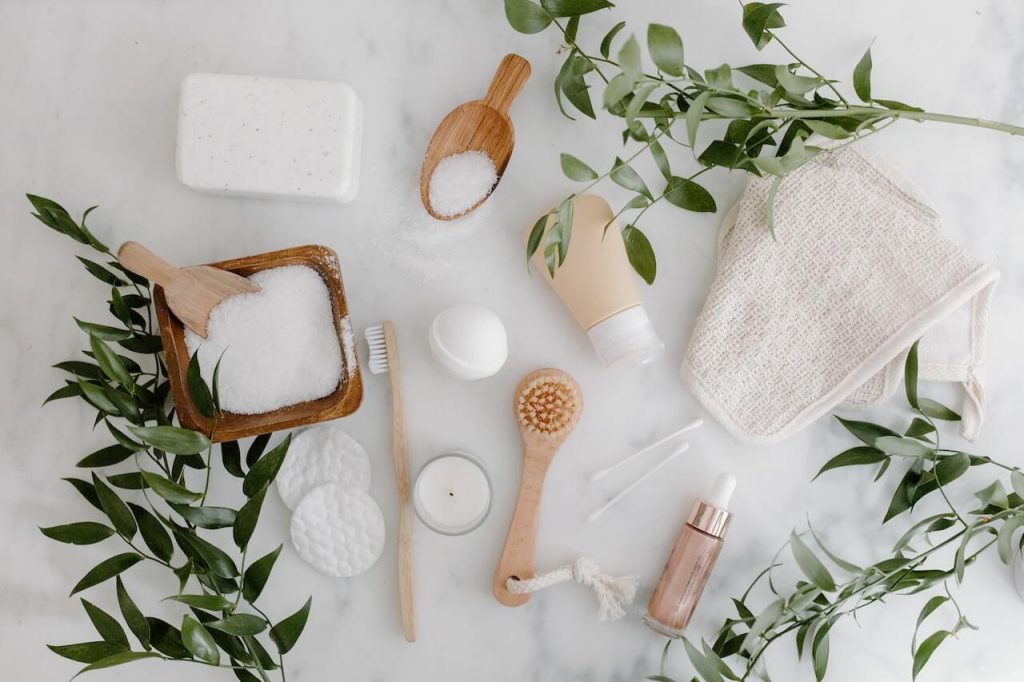
Choosing non-toxic personal care products will pay off big time if you want to limit your toxin exposure and reduce toxins in your body.
There are a multitude of toxins found in personal care products like shampoo, conditioner, lotion, body wash, toothpaste, even feminine hygiene items, toilet paper, and more.
These are items you’re using directly on your skin, in your mouth, and even around your lady parts!
Remember artificial fragrances and phthalates from the fragrance section above? You’ll find those in most personal care items along with other toxic culprits like parabens.
Parabens are endocrine disrupting artificial preservatives with genotoxic [30] and cytotoxic [31] effects that harm reproductive health [32], can cause infertility [33], and increase the risk of cancer, especially breast cancer [34].
All of these toxic ingredients in personal care products add to your toxic load and can result in some major health issues.
And let’s not forget about chlorine bleach, which is often found in feminine care products and even toilet paper, along with other toxic chemicals like BPA and more.
Get 10% OFF every Primally Pure order with discount code “WLM” (save this code – it can be used every time you order)!
Non-Toxic Swaps for Personal Care Items to Reduce Your Toxin Build Up
When it comes to reducing your toxin build up with personal care items, body lotion is a good place to start. That’s because it covers the most area of your body.
Lotion is also one of the cheapest swaps to make because you can replace it with unrefined, cold-pressed coconut oil!
I don’t recommend using coconut oil on your face though since it’s comedogenic, meaning it can clog your pores.
For your facial moisturizer, cleanser, and other skincare, I recommend switching to all-natural skincare like Primally Pure (my obsession). BTW… you can get 10% off every PP purchase with code “WLM” + get cash back with Rakuten!
Then move on to shampoo and conditioner, oral hygiene products, cosmetics, feminine products, toilet paper, etc. Here are some options to get you started:
👉 For even more non-toxic personal care swaps, check out: Non-Toxic Personal Care Swaps: 15 Simple Low-Tox Upgrades for Your Daily Routine

5. Organic Food
Last but not least for how to reduce toxins in your body is food. If “we are what we eat,” do we really want to be eating pesticides and other toxic ingredients?
Choosing healthier options for food is a fantastic way to reduce toxic load.
Fruits and veggies that aren’t organic have several issues. The main problem is obviously pesticides. But there’s also the issue with Genetically Modified Organisms (GMOs).
The glyphosate-based herbicide “Roundup” is used on GMO foods and is a carcinogen [35] and endocrine disruptor [36] that causes stomach inflammation [37] as well as chromosomal and DNA damage [38].
Luckily, organic foods are not only grown without the use of synthetic chemical pesticides, they’re also non-GMO. So they’re a win-win!
Once in a while you’ll get lucky and find an organic version of a food item that’s the same cost or just slightly more than the non-organic version. But let’s be honest, organic food is generally more expensive.
So rather than buy everything organic and feel like your bank account is going to have a nervous breakdown, start by purchasing organic for the fruits and veggies on the Environmental Working Group’s Dirty Dozen list.
These are the 12 produce items that are the most contaminated with the highest levels of pesticides. And according to the EWG’s 2023 Dirty Dozen Testing for the highest levels of pesticide residue found on produce:
“The neurotoxic organophosphate insecticide acephate, prohibited from use on green beans in 2011, was detected on six percent of green bean samples.”
Isn’t that scary?! You can see why the Dirty Dozen are the ones you should definitely go organic with.
Alternatively, there’s also a Clean 15 list of fruits and vegetables with the lowest amounts of pesticide residues currently. These would be your best bet for non-organic.
👉 You may also like: How to Lose Weight Naturally (Without Diets, Drama, or Soul-Sucking Workouts)
Non-Toxic Swaps for Food to Reduce Your Toxin Build Up
The first place to focus on with food is going organic with the Dirty Dozen fruits and veggies. That goes for fresh, frozen, and canned versions.
Fresh is best, but frozen is usually cheaper than fresh. And frozen or dry (i.e. beans) are better than canned because cans are lined with BPA or other chemical-based linings.
Once you’re in the habit of buying organic versions of the Dirty Dozen, you can gradually start incorporating more organic foods into your grocery haul.
If you can’t afford organic beyond produce items, you can still make healthier food choices. Focus on ingredient labels. Buy the best quality you can afford, and avoid anything artificial.
If you see any artificial colors, artificial flavors, artificial preservatives, or artificial sweeteners, put that item back on the shelf, and run!
Looking for examples of healthier alternatives for foods? Here you go:
| THIS | ➞ | THAT |
| Refined Sugar, Artificial Sweeteners | ➞ | Natural Sweeteners like Raw Honey, Pure Maple Syrup, Coconut Sugar, or Monk Fruit Extract (example: sweeten plain Greek yogurt with honey) |
| Vegetable Oils (i.e. Canola Oil) | ➞ | Cold-Pressed, Unrefined Olive Oil, Avocado Oil, or Coconut Oil (since avocados are the number one produce item on the Clean 15, non-organic avocado oil, that would be your best bet for non-organic) |
| Canned Food | ➞ | Fresh, Frozen, or Dry (i.e. beans) |
| Margarine | ➞ | Real Butter (organic is best, organic and grass-fed is even better) |
| Coffee Creamer | ➞ | Half & Half with liquid Monk Fruit Extract or Stevia Homemade: 13.5 oz can full fat (not “light”) Coconut Milk + 1 tbs Pure Maple Syrup + 1 tsp Vanilla Extract (or non-alcoholic Vanilla) |
| Soda | ➞ | Kombucha |
| Candy | ➞ | Dried Fruit (I eat these medjool dates like they’re candy!) Healthy Homemade Candied Walnuts (no refined sugar) Homemade Energy Bites Homemade Granola |
| Chips | ➞ | Veggies with Hummus or homemade Greek Yogurt Ranch |
| Meat Stick | ➞ | Paleovalley 100% Grass Fed Beef Sticks |

Wrapping Up 5 Easy Ways to Start Reducing Your Toxin Build Up
By now, you have seen that there are small changes you can make to reduce toxins in your body. From eating organic to switching to natural beauty products and household cleaners, you can take action.
Ultimately, it’s up to us to take charge of our health and wellbeing. As Zadie Smith said, “take care of your body. It’s the only place you have to live.” If we make an effort to reduce our toxins, the results will be powerful.
By taking small steps and being mindful of the products you use and the food you eat, you can experience life-changing health improvements.
As with any lifestyle changes, the effects won’t be seen and felt overnight. Reducing toxins in your body is an ongoing process that will become an unconscious habit.
With consistency and dedication, you can take better control of your health and start on the path to a life of wellbeing. Making the effort to reduce your toxin exposure is the first step to getting and staying healthy.
So start the journey to reducing your toxin build up today, and free your body from toxins! Be sure to grab your Free 5-Day Clean Living Kickstart to help you get started!
Have any questions or other tips for how to reduce toxins in your body? Drop a comment below!
5 Days to a Cleaner, Low-Tox Home (Without the Overwhelm)
You don’t need to replace everything you own or go down an ingredient-research rabbit hole to start living cleaner.
This FREE 5-Day Clean Living Kickstart walks you through one simple swap a day—the kind that actually fits into real life (yes, even mama life).
No overwhelm. No perfection required. Just progress you can feel good about.

References
- Jephcote, C., Brown, D., Verbeek, T. et al. A systematic review and meta-analysis of haematological malignancies in residents living near petrochemical facilities. Environ Health 19, 53 (2020). https://doi.org/10.1186/s12940-020-00582-1 (https://ehjournal.biomedcentral.com/articles/10.1186/s12940-020-00582-1)
- Demeneix BA. How fossil fuel-derived pesticides and plastics harm health, biodiversity, and the climate. Lancet Diabetes Endocrinol. 2020 Jun;8(6):462-464. doi: 10.1016/S2213-8587(20)30116-9. PMID: 32445732; PMCID: PMC7239621. (https://www.ncbi.nlm.nih.gov/pmc/articles/PMC7239621/)
- Aksha Sharma, Preeti Sharma, Ajay Sharma, Richa Tyagi, Aparna Dixit. Hazardous Effects of Petrochemical Industries: A Review. Recent Adv Petrochem Sci. 2017; 3(2): 555607. DOI:10.19080/RAPSCI.2017.03.555607 (https://juniperpublishers.com/rapsci/RAPSCI.MS.ID.555607.php)
- Yu-Chih Wang, Hung-Sheng Chen, Cheng-Yu Long, Cheng-Fang Tsai, Tsung-Hua Hsieh, Chia-Yi Hsu, Eing-Mei Tsai, Possible mechanism of phthalates-induced tumorigenesis, The Kaohsiung Journal of Medical Sciences, Volume 28, Issue 7, Supplement, 2012, Pages S22-S27, ISSN 1607-551X, https://doi.org/10.1016/j.kjms.2012.05.006. (https://www.sciencedirect.com/science/article/pii/S1607551X12001532)
- Lauretta R, Sansone A, Sansone M, Romanelli F and Appetecchia M (2019) Endocrine Disrupting Chemicals: Effects on Endocrine Glands. Front. Endocrinol. 10:178. doi: 10.3389/fendo.2019.00178 (https://www.frontiersin.org/articles/10.3389/fendo.2019.00178/full)
- Marsman D. NTP technical report on the toxicity studies of Dibutyl Phthalate (CAS No. 84-74-2) Administered in Feed to F344/N Rats and B6C3F1 Mice. Toxic Rep Ser. 1995 Apr;30:1-G5. PMID: 12209194. (https://pubmed.ncbi.nlm.nih.gov/12209194/)
- Abdo, N., Al-Khalaileh, H., Alajlouni, M. et al. Screening for phthalates biomarkers and its potential role in infertility outcomes in Jordan. J Expo Sci Environ Epidemiol 33, 273–282 (2023). https://doi.org/10.1038/s41370-022-00517-7 (https://www.nature.com/articles/s41370-022-00517-7)
- Toft G, Jönsson BA, Lindh CH, Jensen TK, Hjollund NH, Vested A, Bonde JP. Association between pregnancy loss and urinary phthalate levels around the time of conception. Environ Health Perspect. 2012 Mar;120(3):458-63. doi: 10.1289/ehp.1103552. Epub 2011 Nov 23. PMID: 22113848; PMCID: PMC3295336. (https://pubmed.ncbi.nlm.nih.gov/22113848/)
- Shaffer RM, Ferguson KK, Sheppard L, James-Todd T, Butts S, Chandrasekaran S, Swan SH, Barrett ES, Nguyen R, Bush N, McElrath TF, Sathyanarayana S; TIDES Study team. Maternal urinary phthalate metabolites in relation to gestational diabetes and glucose intolerance during pregnancy. Environ Int. 2019 Feb;123:588-596. doi: 10.1016/j.envint.2018.12.021. Epub 2019 Jan 7. PMID: 30622083; PMCID: PMC6347428. (https://www.ncbi.nlm.nih.gov/pmc/articles/PMC6347428/)
- Qian Y, Shao H, Ying X, Huang W, Hua Y. The Endocrine Disruption of Prenatal Phthalate Exposure in Mother and Offspring. Front Public Health. 2020 Aug 28;8:366. doi: 10.3389/fpubh.2020.00366. PMID: 32984231; PMCID: PMC7483495. (https://www.ncbi.nlm.nih.gov/pmc/articles/PMC7483495/)
- Marie C, Vendittelli F, Sauvant-Rochat MP. Obstetrical outcomes and biomarkers to assess exposure to phthalates: A review. Environ Int. 2015 Oct;83:116-36. doi: 10.1016/j.envint.2015.06.003. Epub 2015 Jun 26. PMID: 26118330. (https://pubmed.ncbi.nlm.nih.gov/26118330/)
- Wang Y, Qian H. Phthalates and Their Impacts on Human Health. Healthcare (Basel). 2021 May 18;9(5):603. doi: 10.3390/healthcare9050603. PMID: 34069956; PMCID: PMC8157593. (https://www.ncbi.nlm.nih.gov/pmc/articles/PMC8157593/)
- Konkel L. Phthalates and Autistic Traits: Exploring the Association between Prenatal Exposures and Child Behavior. Environ Health Perspect. 2020 Oct;128(10):104001. doi: 10.1289/EHP7127. Epub 2020 Oct 6. PMID: 33021396; PMCID: PMC7537731. (https://www.ncbi.nlm.nih.gov/pmc/articles/PMC7537731/)
- Kobrosly RW, Evans S, Miodovnik A, Barrett ES, Thurston SW, Calafat AM, et al.2014. Prenatal phthalate exposures and neurobehavioral development scores in boys and girls at 6–10 years of age. Environ Health Perspect122(5):521–528, PMID: 24577876, 10.1289/ehp.1307063. (https://ehp.niehs.nih.gov/doi/10.1289/ehp.1307063)
- Whyatt RM, Perzanowski MS, Just AC, Rundle AG, Donohue KM, Calafat AM, Hoepner LA, Perera FP, Miller RL. Asthma in inner-city children at 5-11 years of age and prenatal exposure to phthalates: the Columbia Center for Children’s Environmental Health Cohort. Environ Health Perspect. 2014 Oct;122(10):1141-6. doi: 10.1289/ehp.1307670. Epub 2014 Sep 17. PMID: 25230320; PMCID: PMC4181924. (https://pubmed.ncbi.nlm.nih.gov/25230320/)
- Lind PM, Zethelius B, Lind L. Circulating levels of phthalate metabolites are associated with prevalent diabetes in the elderly. Diabetes Care. 2012 Jul;35(7):1519-24. doi: 10.2337/dc11-2396. Epub 2012 Apr 12. PMID: 22498808; PMCID: PMC3379584.(https://www.ncbi.nlm.nih.gov/pmc/articles/PMC3379584/)
- https://www.bcpp.org/resource/phthalates/
- Thomas P Ahern, PhD, MPH, Logan G Spector, PhD, Per Damkier, MD, PhD, Buket Öztürk Esen, MS, Sinna P Ulrichsen, MS, Katrine Eriksen, MS, Timothy L Lash, DSc, MPH, Henrik Toft Sørensen, MD, PhD, DMSc, Deirdre P Cronin-Fenton, PhD, Medication–Associated Phthalate Exposure and Childhood Cancer Incidence, JNCI: Journal of the National Cancer Institute, Volume 114, Issue 6, June 2022, Pages 885–894, https://doi.org/10.1093/jnci/djac045 (https://academic.oup.com/jnci/article-abstract/114/6/885/6531974?redirectedFrom=fulltext)
- Svanes Ø, Bertelsen RJ, Lygre SHL, Carsin AE, Antó JM, Forsberg B, García-García JM, Gullón JA, Heinrich J, Holm M, Kogevinas M, Urrutia I, Leynaert B, Moratalla JM, Le Moual N, Lytras T, Norbäck D, Nowak D, Olivieri M, Pin I, Probst-Hensch N, Schlünssen V, Sigsgaard T, Skorge TD, Villani S, Jarvis D, Zock JP, Svanes C. Cleaning at Home and at Work in Relation to Lung Function Decline and Airway Obstruction. Am J Respir Crit Care Med. 2018 May 1;197(9):1157-1163. doi: 10.1164/rccm.201706-1311OC. PMID: 29451393. (https://www.atsjournals.org/doi/pdf/10.1164/rccm.201706-1311oc, https://www.uib.no/en/news/115228/household-cleaning-can-be-bad-smoking-lung-function)
- Ogbodo JO, Arazu AV, Iguh TC, Onwodi NJ, Ezike TC. Volatile organic compounds: A proinflammatory activator in autoimmune diseases. Front Immunol. 2022 Jul 29;13:928379. doi: 10.3389/fimmu.2022.928379. PMID: 35967306; PMCID: PMC9373925. (https://www.ncbi.nlm.nih.gov/pmc/articles/PMC9373925/)
- Jephcote, C., Brown, D., Verbeek, T. et al. A systematic review and meta-analysis of haematological malignancies in residents living near petrochemical facilities. Environ Health 19, 53 (2020). https://doi.org/10.1186/s12940-020-00582-1 (https://ehjournal.biomedcentral.com/articles/10.1186/s12940-020-00582-1)
- Demeneix BA. How fossil fuel-derived pesticides and plastics harm health, biodiversity, and the climate. Lancet Diabetes Endocrinol. 2020 Jun;8(6):462-464. doi: 10.1016/S2213-8587(20)30116-9. PMID: 32445732; PMCID: PMC7239621. (https://www.ncbi.nlm.nih.gov/pmc/articles/PMC7239621/)
- Aksha Sharma, Preeti Sharma, Ajay Sharma, Richa Tyagi, Aparna Dixit. Hazardous Effects of Petrochemical Industries: A Review. Recent Adv Petrochem Sci. 2017; 3(2): 555607. DOI:10.19080/RAPSCI.2017.03.555607 (https://juniperpublishers.com/rapsci/RAPSCI.MS.ID.555607.php)
- Musshoff U, Madeja M, Binding N, Witting U, Speckmann EJ. Effects of 2-phenoxyethanol on N-methyl-D-aspartate (NMDA) receptor-mediated ion currents. Arch Toxicol. 1999 Feb;73(1):55-9. doi: 10.1007/s002040050586. PMID: 10207615. (https://pubmed.ncbi.nlm.nih.gov/10207615/)
- National Center for Biotechnology Information (2023). PubChem Compound Summary for CID 31236, 2-Phenoxyethanol. Retrieved May 6, 2023 from https://pubchem.ncbi.nlm.nih.gov/compound/2-Phenoxyethanol.
- https://datasheets.scbt.com/sc-238193.pdf
- https://www.ncbi.nlm.nih.gov/pmc/articles/PMC1470243/pdf/envhper00326-0221.pdf
- Lee E, An S, Choi D, Moon S, Chang I. Comparison of objective and sensory skin irritations of several cosmetic preservatives. Contact Dermatitis. 2007 Mar;56(3):131-6. doi: 10.1111/j.1600-0536.2007.01001.x. PMID: 17295686. (https://pubmed.ncbi.nlm.nih.gov/17295686/)
- https://www.safecosmetics.org/chemicals/phenoxyethanol/
- Darbre PD, Harvey PW. Paraben esters: review of recent studies of endocrine toxicity, absorption, esterase and human exposure, and discussion of potential human health risks. J Appl Toxicol. 2008 Jul;28(5):561-78. doi: 10.1002/jat.1358. PMID: 18484575. (https://pubmed.ncbi.nlm.nih.gov/18484575/)
- Güzel Bayülken D, Ayaz Tüylü B, Sinan H, Sivas H. Investigation of genotoxic effects of paraben in cultured human lymphocytes. Drug Chem Toxicol. 2019 Jul;42(4):349-356. doi: 10.1080/01480545.2017.1414834. Epub 2017 Dec 27. PMID: 29281926. (https://pubmed.ncbi.nlm.nih.gov/29281926/)
- https://www.ewg.org/what-are-parabens
- Renata S. Tavares, Fátima C. Martins, Paulo J. Oliveira, João Ramalho-Santos, Francisco P. Peixoto, Parabens in male infertility—Is there a mitochondrial connection?, Reproductive Toxicology, Volume 27, Issue 1, 2009, Pages 1-7, ISSN 0890-6238, https://doi.org/10.1016/j.reprotox.2008.10.002. (https://www.sciencedirect.com/science/article/pii/S0890623808002682)
- Barr, L.; Metaxas, G.; Harbach, C.A.J.; Savoy, L.A.; Darbre, P.D. Measurement of Paraben Concentrations in Human Breast Tissue at Serial Locations across the Breast from Axilla to Sternum. J. Appl. Toxicol. 2012, 32, 219–232. (https://analyticalsciencejournals.onlinelibrary.wiley.com/doi/full/10.1002/jat.1786)
- Luoping Zhang, Iemaan Rana, Rachel M. Shaffer, Emanuela Taioli, Lianne Sheppard, Exposure to glyphosate-based herbicides and risk for non-Hodgkin lymphoma: A meta-analysis and supporting evidence, Mutation Research/Reviews in Mutation Research, Volume 781, 2019, Pages 186-206, ISSN 1383-5742, https://doi.org/10.1016/j.mrrev.2019.02.001. (https://www.sciencedirect.com/science/article/pii/S1383574218300887)
- Gasnier C, Dumont C, Benachour N, Clair E, Chagnon MC, Séralini GE. Glyphosate-based herbicides are toxic and endocrine disruptors in human cell lines. Toxicology. 2009 Aug 21;262(3):184-91. doi: 10.1016/j.tox.2009.06.006. Epub 2009 Jun 17. PMID: 19539684. (https://pubmed.ncbi.nlm.nih.gov/19539684/)
- Carman, J.A. & Vlieger, H.R. & Steegd, L.J. & Sneller, V.E. & Robinson, G.W. & Clinch-Jones, C.A. & Haynes, Julie & Edwards, John. (2013). A long-term toxicology study on pigs fed a combined genetically modified (GM) soy and GM maize diet. Journal of organic systems. 8. 38-54. (http://www.organic-systems.org/journal/81/8106.pdf)
- https://www.iarc.who.int/wp-content/uploads/2018/07/MonographVolume112-1.pdf




0 Comments